Affable Beasts: An Interview with Michael Thomas Taren on Tomaž Šalamun

download

It is a thrilling thing, for many of us, to consider a new book by Tomaž Šalamun. Now, nearly an exact year after Šalamun’s death, we have Justice, the first posthumous work. It is Šalamun at his very best, full of energy, always after different approaches, exploding his vision into a celestial pantheon of different realities. A few months ago in these pages I shared some thoughts, and, especially, favorite lines of Šalamun’s past works. This month I had the pleasure of chatting with Šalamun’s translator and collaborator, poet Michael Thomas Taren, about this first posthumous collection, working with Šalamun, and the unique endeavor of translation as a creative enterprise. His effervescent illuminations offer the perfect precursor to the new poems, available soon from Black Ocean.

Read the interview at Michigan Quarterly Review

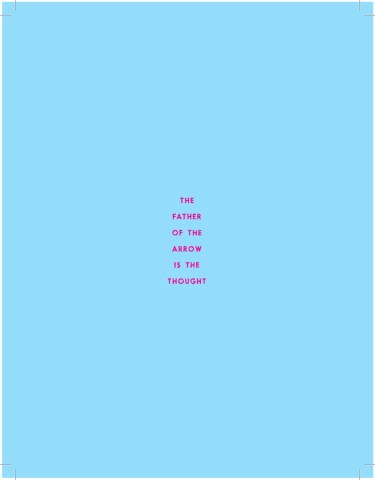
Book Review: “The Father of the Arrow is the Thought,” by Christopher Deweese

Father-of-Arrow-Cover

Don’t be confused by the title of Christopher Deweese’s The Father of the Arrow is the Thought—taken from a line by Paul Klee, it suggests poems that might be characterized by a singular trajectory, a martial swiftness that lands us with a wobbling after-strike in our target. And a cursory glance at the poems pretty much supports this—all of them take the form of relatively skinny columns that shoot with a severe straightness down the page. Indeed, we are going somewhere, and pretty fast. But a look at the rest of that Paul Klee quote gives us something which complicates this sense of motion: “How do I expand my reach? Over this river? This lake? That mountain?”

Read the review at NewPages

Interview at New Books in Poetry

480x270_42055

I had a fabulous conversation with Jen Fitzgerald at New Books in Poetry about the Refusal of Suitors. It was so enriching to find myself having this conversation about my work in the context of American letters more largely conceived, to field her fascinating inquiries into form and continuity of voice, to talk about my childhood, the wilderness versus the urban, the virtues of listening to ska in different seasons, and of course, to read large swaths of the collection, which she expertly (and thankfully) curated.

Does form make the poem?

Robert Frost claimed that writing free verse poetry was ‘like playing tennis without a net.’ Ryo Yamaguchi‘s poetry challenges the notion of imposing our will and wonders after the permeability of content. This poet understands the subjectivity of perception and does not insist on form, but instead loosely allows the verse to be contained.

These are the experiences of a wandering poet–one who has known many containers, natural and man-made, who knows how little the natural world tolerates containment; how felled redwoods will sprout new life from up from their horizontal trunks and wisteria will climb and reach with the wide berth of the sun’s rays.

But Yamaguchi does not write rainforests and plains, he writes the internal life, the interactions, the ‘urban sublime’ and gives it the reach the natural world. He finds amazement in all versions of beauty.

Listen to the conversation at New Books In Poetry

What is Inside?: An Interview with Carrie Olivia Adams

OTCOA


Carrie Olivia Adams is a poet as much of the line as what’s in-between them, and her newest book, Operating Theater, is no exception. A haunting drama of the liminality of the body, this dialogue-driven play-poem asks over and over one profound question:what is inside? Steeped in Victorian surgical manuals and medical X-rays, the voices here explore the tension between the mind and the body, between subject and other, asking how we can know, and from knowing, live together, in a house, or in a city.

I had a chance to ask Carrie a few questions about this book (and film her reading from a brief section). . .

Read the interview at Michigan Quarterly Review

Book Review, “Testament,” by G. C. Waldrep

51ow7DiC-5L._SX331_BO1,204,203,200_

“The body as sculpture,” Testament—G. C. Waldrep’s book-length poem—begins, and with it we feel the steadying gesture that prefaces any great feat—fingers at one’s temples, eyes closed, the breath held. He goes on:

The body as sculpture. (Pageant, labyrinth.)
Wrapped like Central Park or Marin
in Christo’s silk, wiving into a future
of minerals and taffeta, hypocausts and gorse.
We have computers to calculate the rocket’s
rate of descent, its pure metaphor.

And we see right away what sort of virtuosity—one hundred and thirty pages of it—lies before us. . .

Read the review at NewPages

A review of my book! At Cleaver Magazine, by Johnny Payne

“This chaste book could be titled The Story of O. Ryo Yamaguchi rhapsodizes, if more quietly, in the mood of Keats when he exclaims “O for a Life of Sensations rather than of Thoughts!”:

O machine, O accord, I no longer ask the things I need
not ask . . .

the slow atmosphere of story has refused too long

to seat my rhythms, and I
have refused to elaborate myself through its lines.

His drama of sensate consciousness is based on the refusal (ergo the title) to follow the suit of narrative poetry, in favor of the mind’s free play. Yet one may legitimately ask, as we sometimes do of historical novels, whether the writer courts anachronism or rather renews the proposition. In the case of Yamaguchi, the answer is complex. . .

Read the review at Cleaver Magazine.

Pressures of Luminosity: Aase Berg’s “Dark Matter” and HDR Photography

Efa4G2k

(Cliff over Houses, © Eivind K. Dovik)

Aase Berg’s Dark Matter is an unrelentingly intense book, a fact that translator Johannes Göransson mentions more than once in his terrific introduction, in which Berg herself, in a quoted interview with Double Room, seems maybe a little embarrassed, about the work being “sickeningly kitschy.” It is early, searching work, comprised of both prose and lineated poems, with a full hydraulic force behind it. It is horror more like Saw than Nightmare on Elm Street—and really more like Revelations than either of those: torture, deformity, blackness, pain, extrusion, shriveling, burning, moaning, animation and suffocation, dark landscapes of the uncanny. Try this on:

And shadows of mongoloids, pinheads, fatdogs, and androids moved toward the wood, rubbed against the fossils and the veinage in the cell walls. There the body was harrowed by beasts, thrown back and forth in a deadsilent battlefight between muscle mechanisms and distorted images, between large milk-white moray eels inside the vein-burst petal skin.

But to approach this collection with gleeful squeamishness, to merely relish its transgressions, to feel raw about it, or worse, at home among your fucked-up people, is, of course, to miss something. This is a visionary project, far more than a simple paean to the grotesque. It is poetry steeped in the Anthropocenic nightmare of industry and apocalypse. It is a book of love and its interlocutors. It is a work of art, a mimesis of the surreal whose efforts are palpable—imbued with the distinct feel of a work-in-progress that strives to, and succeeds at, attaining a new lexicon, a marriage of image and language into a hybrid materiality that, at its best, is exhilaratingly smart and wholly complete.

But the argument I really want to make is, perhaps, much smaller. It is that this is book of opposites, of darkness and of light. That this is a book of HDR photography. . .

Read more at The Hairsplitter