Book Review: “Justice,” by TOMAŽ ŠALAMUN

download

Tomaž Šalamun was one of those rare artists who got to live — at least a little bit — in his own legacy. When he died at the very end of 2014, poets — American poets, especially — were quick to gather in a circle around this legacy, writing words of praise and admiration that were not simply eulogies but reassertions of Šalamun’s crucial role in the experimentalist impulse that has so gripped American poetry in the past two decades.

But Šalamun didn’t just live in his own legacy — he worked in it. . .

Read the review at Bookslut
Literary Promises: A Look at Last Year’s Books as a List of New Year’s Resolutions

harmony-620x325

My year was rich, and I hope yours was, too. It was full of joys and frustrations, thrombosis and the evenest sleeps, massive blizzards with fragmenting winds, rains that blurred the boundaries between body and air, and the exasperations of humidity rising off the tennis courts in the park near my home. I listened to the otherworldlygargling calls of ‘ua’u in the young but stelliferous dark of Haleakala, let the shutter out on my Nikon to see those same stars in the sapphire depth of Wisconsin’s skies, and I spent an inordinate amount of time staring out at the Chicago river from the exhibit hall in the Sheraton Grand Chicago, where I also learned how to sell books on the run. I learned how to make kimchi and that my brother-in-law knows how to replace rotors and brakes. I went to California twice.

Read the feature at Michigan Quarterly Review

Book Review: “The Father of the Arrow is the Thought,” by Christopher Deweese

Father-of-Arrow-Cover

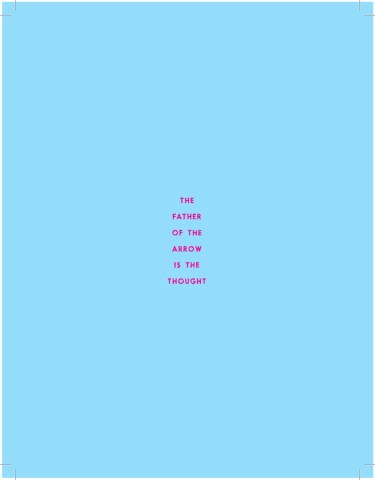
Don’t be confused by the title of Christopher Deweese’s The Father of the Arrow is the Thought—taken from a line by Paul Klee, it suggests poems that might be characterized by a singular trajectory, a martial swiftness that lands us with a wobbling after-strike in our target. And a cursory glance at the poems pretty much supports this—all of them take the form of relatively skinny columns that shoot with a severe straightness down the page. Indeed, we are going somewhere, and pretty fast. But a look at the rest of that Paul Klee quote gives us something which complicates this sense of motion: “How do I expand my reach? Over this river? This lake? That mountain?”

Read the review at NewPages

Book Review: “Tells of the Crackling,” by Hoa Nguyen

Tells of the Crackling, GIANT

I have always found Hoa Nguyen’s poems surprisingly comfortable to inhabit, considering the challenges they can offer, and Tells of the Crackling, a lovely little hand-stitched chapbook from Ugly Duckling Presse, is no different. Spare, elliptical—not exactly breezy, but roomy—these poems are a bit like walking over a brick path gone uneven from the undergrowth, fresh and tentative vegetal shoots sending trajectories of thought this way and that. Indeed, there is a dual “crackling” of both spring and autumn that characterize the poems, a light and almost sickly feel, a mind not quite right, the sound of tea being made in the background. . .

Read the review at NewPages

Book Review: “My Multiverse,” by Kathleen Halme

my multiverse

Kathleen Halme’s My Multiverse opens with a marvelous set-piece, a multi-part cycle (that comprises the entirety of the first section of the six-sectioned book) titled “City of Roses” that begins with that tender invitational, “Dear,” and from there pans its camera over the big and small, visiting with different characters and embracing the ambience of different scenes all within the same city, Halme’s own Portland, Oregon. It’s a gesture in line with the great urban works, likeUlysses, which endeavor to sketch the cultural, emotional, and physical anatomy of a city: “Blocks and blocks of ornate iron-front buildings. / Shanghai traps and tunnels. / Iron horse rings to which someone / has hitched tiny plastic palominos.”. . .

Read the review at NewPages

Book Review: “Illocality,” by Joseph Massey

massey.illocality.for_website_grande

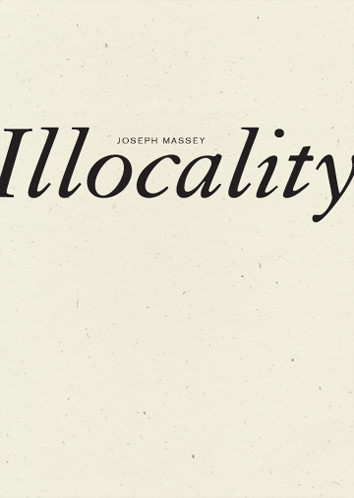
Joseph Massey mentions in the refreshingly spare notes of his fourth collection Illocalitythat he first encountered his title word in the Emily Dickinson poem “A nearness to Tremendousness.” Dickinson is an apt predecessor for a poet of such deliberate cerebralness. Yet, for his fine command of image, so is William Carlos Williams, or any number of Asian short-form poets. Indeed it is the relationship between logic and image, mind and world, that drives these poems so evenly through their inquiries, that most characterizes their productive tensions. “We think / ourselves here,” Massey writes to close the opening poem “Parse.”

Read the review at NewPages

Review Essay: Thomas Hummel’s “Letters & Buildings” and the Pleasures of Difficult Poetry

Hummel-Cover

I love difficult poetry. It challenges reading itself as an endeavor and, thereby, meaning-making, imagination, voice, mood, psyche, even politics. And it can do so in an astonishing diversity of ways. One might, in fact, offer a typology of difficult poetry. Maybe a poem sends you over and over to the library, like Pound’s Cantos. Maybe it evades with an arrhythmia of syntax, like Berryman’s Dream Songs. Maybe it sloughs its lines off with seemingly little regard for a coherent sentiment, a voice of impulse and erasure, something like what John Ashbery does. Or maybe it simply overwhelms with language, with sound and light, like the poems of the wonderful contemporary poet, Joyelle McSweeney. The point is, difficult poems aren’t simply difficult; they are difficult in different kinds of ways.

And I’d like to argue that the poems in Thomas Hummel’s Letters & Buildings are difficult in one of the best kinds of ways, one that can elucidate why we ought ever to twist our faces over challenging lines.

Read the review essay at The Hairsplitter

Book Review, “Testament,” by G. C. Waldrep

51ow7DiC-5L._SX331_BO1,204,203,200_

“The body as sculpture,” Testament—G. C. Waldrep’s book-length poem—begins, and with it we feel the steadying gesture that prefaces any great feat—fingers at one’s temples, eyes closed, the breath held. He goes on:

The body as sculpture. (Pageant, labyrinth.)
Wrapped like Central Park or Marin
in Christo’s silk, wiving into a future
of minerals and taffeta, hypocausts and gorse.
We have computers to calculate the rocket’s
rate of descent, its pure metaphor.

And we see right away what sort of virtuosity—one hundred and thirty pages of it—lies before us. . .

Read the review at NewPages

Book Review: “a/0,” by Laura Bylenok

41cgKZs8CBL._SY344_BO1,204,203,200_

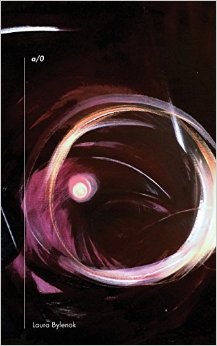
Hemmed in by questions, suspended over days that mete out incremental evidence, with an investigative protagonist alternating between the archive and the street, this little chapbook—a/0—is an exemplar of the detective genre. But it is so much stranger than most. One wants to say Pynchon or Murakami. No usual suspects here, and the universe is not what you think.

Read the review at NewPages.

Book Review: “The Last Two Seconds,” by Mary Jo Bang

51m2+ihKzyL._SY344_BO1,204,203,200_

Mary Jo Bang is a slippery poet, with a mind that often seems a few seconds ahead of itself. A quick glance at the cover of her new book, The Last Two Seconds, perfectly encapsulates this kind of speed: the monorail that has just slipped from our frame of vision, the typography of the title trailing like a futurist contrail. It is this trailing, however, that is a crucial point—this collection is not about the next two seconds, but the last—as in the last two seconds you’ve just spent reading this sentence.

Take a quick leap of scale and you land at the collection’s central concern: history. . .

Read more at NewPages