2 Poems at A Bad Penny Review

Skate-614x250

Really excited to have two poems in 6.1 of A Bad Penny Review! “Spin” and “Part of the Fairness” are slotted in there with a haunting cycle from Mia Ayumi Malhotra, Stephen Emmerson’s visual rewrite of poems by 15th cent Japanese poet Ikkyu Sojun on prepared typewriter, and a super cool erasure of the Boy Scouts of America by doyen of erasure, Jenni B. Baker, among other fabulous works. It’s a great issue!


Book Review: “Come In Alone,” by Anslem Berrigan

Come_in_Alone_for_website_grande.jpg

I hate to focus so much on form, but in this review of Anselm Berrigan’s Come In Alone, form will take center stage. Or more accurately: form will frame the way we encounter Berrigan’s electric and vocally driven sensibilities. Because the very first thing you will notice when you open this book is the simple but profoundly innovative design, which runs all of the text as a border around an otherwise empty page. (You can look at sample pages here at the publisher’s website.)

This format might initially strike readers as gimmicky, but for as much as we talk about the space between the lines, about emptiness as a conditioning feature of poetics, I’m surprised I’ve never really encountered (even in the worlds of concrete or visual poetry) this simply conceived but radically reorienting layout, which does so much to give emptiness its primacy. Berrigan’s poems immediately force the reader to confront this emptiness as a powerful aesthetic force, and that alone is worth attention.

What the poems do after that, though, is even richer. . .

Read the review at NewPages

An interview about my book with Allison Peters

I was so thrilled to have this deep conversation with Allison Peters over at one my stomping grounds, Michigan Quarterly Review, about my book, The Refusal of Suitors. We talked about the book, the nature of the city, anxiety, lifecourse, and what it means to work and love. She chose wonderful lines and asked astonishing questions. Read the entire interview here. Here’s a quick clip of her introduction:

The lyric ruminations Ryo Yamaguchi offers in his debut book of poetry, The Refusal of Suitors (Noemi Press, 2015), sink deeper than the ink on the page—and they rise up higher than the oxygen masks in the overhead compartment of the plane I was on as I read this impressive first book for the first time.

The Refusal of Suitors is a collection of poems that speaks to the you who’s on a level you’re hardly aware of—to the you who’s under there, somewhere, wondering what it’s all for and how. Ryo’s words unfold like music, his language both sharp and soft, his poems altogether dreamy in their fleeting effervescence, like city lights blinking through city smoke. (“Ode #1” ends: “This is the boulevard smudged with vacancies.”)

Reading Ryo’s poetry, it’s as if trapdoors open to hidden heart-caves between the lines, each poem glowing like an intangible peach. The words summer, flowers,and memory echo throughout the collection, melodically painting “the anxiety of landscape” with a brush of precious promiselessness.

These poems take a chance at impermanent transcendence, and it’s worth it. “What we call the beginning,” Ryo writes in “Post,” “is really just / the first thing we have recorded.” The Refusal of Suitors exists now as its own kind of record, presenting an exciting debut for the poet.

I recently had the opportunity to talk with Ryo about his book. (Editor’s note: you may have already met Ryo via his essays for MQR.) We discussed poetry, philosophy, anxiety, cities, love, and dreams—and about his hopes for the future.


Sound and Light: A Quick Tour of Recorded Poetry Archives

15327339934_b37ccf56cc_o-620x413

I’ve always found the idea of the archive startling. This is to distinguish the archive from the library in a crucial way—the archive being a preservation of ephemera: letters, ledgers, and other bureaucratic documents; marginalia, fragments, and chit-chat. This is in contrast to the library’s ordered rows of lovingly bound volumes, objects materially and commercially deemed memorable, whose memory is automated by the machinery that distributed it in the first place. The archive is memory compelled, memory deliberated, held onto, preserved like a kind of wildlife—memory forced into being.

There is a politics to this, but there is also an aesthetics—the after-effect of the force of the archive is a kind of ghosting: it hints too uncannily at history reified, at history returned to the present. The voice is physically indexed, it leaves a residue in a way it simply can’t in the ordination of the library. Nowhere can one feel this than in the archives of poetry read aloud, that most ephemeral event. In this short post, I wanted to share some of the marvelous archives of poetry readings that are available. Perhaps many of these places will be familiar to you, but here they are gathered in one place, in a brief recognition of the important work put toward the preservation of the reading. . .

Read the feature at Michigan Quarterly Review.

Book Review: “The Animal Too Big to Kill,” by Shane McCrae

51C-1FVg+4L._SX342_BO1,204,203,200_

A new era of civil rights protest is here. #BlackLivesMatter announces a new racial consciousness locked on highly public injustices, police violence caught on dash cam videos and decried on Twitter, weeks-long street demonstrations helicoptered over and fed into living rooms via live streams. With the muscular momentum of wider discord, It stomps a foot in the dirt, showing us the hard truth that racism in America is as strong as ever, a brutally systemic force, at once blunt and complex.

It is into this outraged public consciousness that Shane McCrae’s prodigious output of poems (four collections in the past five years) occurs and must be received. Read some of the titles of the present collection, The Animal Too Big to Kill, and this protest is confirmed — titles such as “What it Takes to Get the Attention of White Liberals” and “I Know It’s Hard For You to Believe You Still Benefit from Slavery,” which evidence a deep awareness of the context in which these poems will be read and gesture a distinct stance — one of provocation and protest — toward that context.

So it is surprising that such a collection would begin like this:

I haven’t Lord I haven’t You I have-
n’t praised enough You Lord although I with or would
With every poem praise you

Read the review at Bookslut

Small Press Snapshot: Timeless, Infinite Light

timeless-infinite-light-620x466

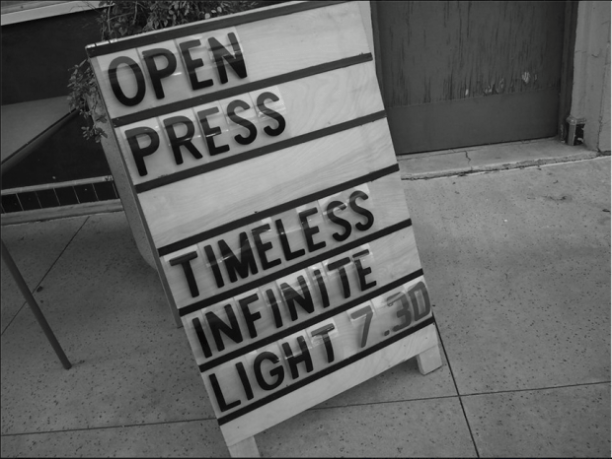
Timeless, Infinite Light is a small poetry publisher based in Oakland, but to put it that way is to sap the force out of their astonishing vigor. They are a press of the dark matter of consciousness as a nexus between heritage and the glitter of possibility, of otherness as a radical force of nature blowing tenderly but insistently against the contemporary structures of power. Their “books are spells for unraveling capitalism,” as they put it themselves, and they “believe in the radical potential of collaborative, hybrid, and embodied writing.”

I have been in love with what has grown out of these ideas. . .

Read the feature at Michigan Quarterly Review

Book Review: “Of Things,” by Michael Donhauser

image0000

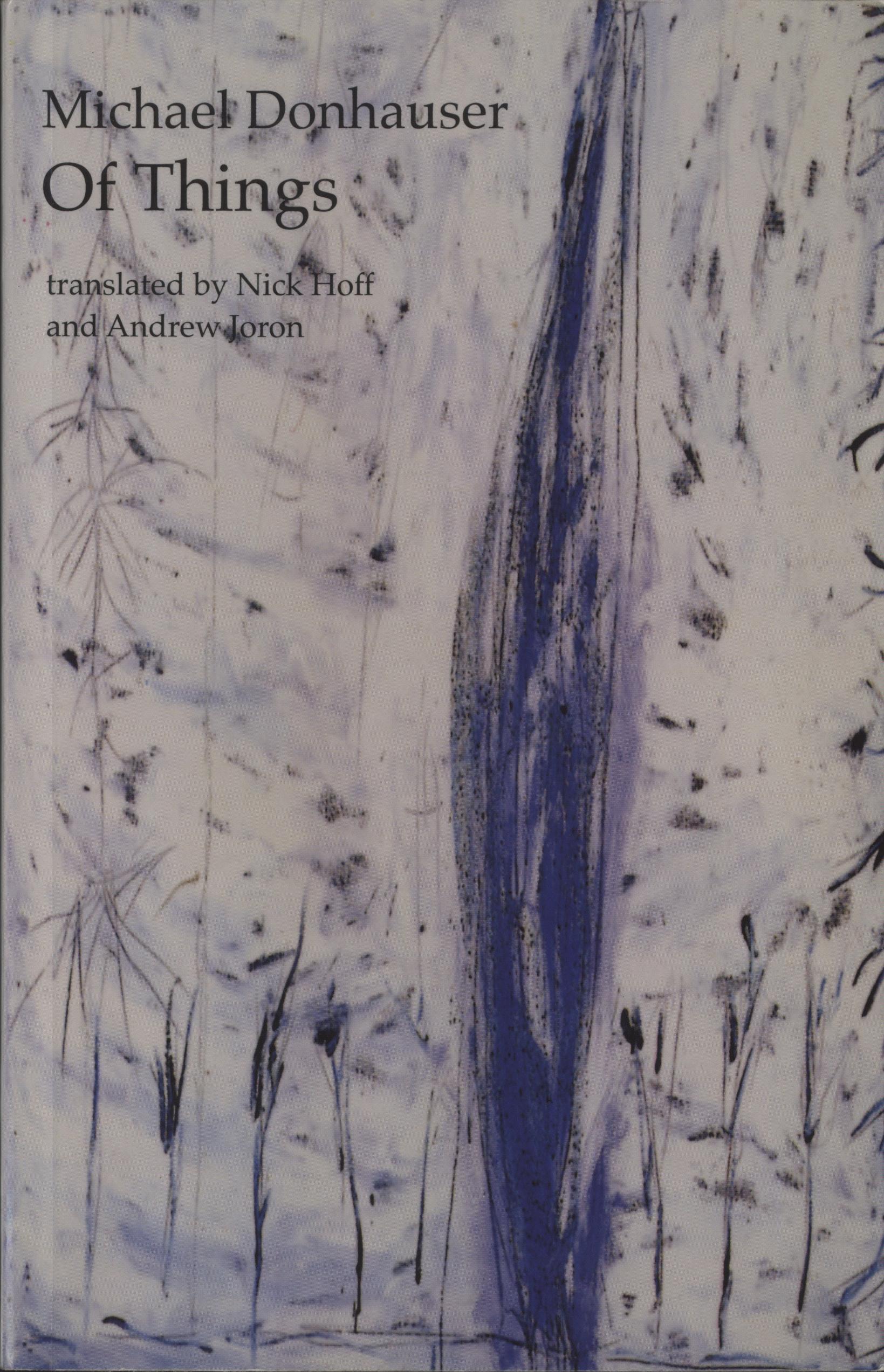
Michael Donhauser is an accomplished Austrian poet, essayist, and critic whose books date back nearly thirty years, but he is not widely known to English readers. It makes him a great candidate for Dichten—Burning Deck’s translation series, which brings this rich and varied collection, Of Things (first published in German nearly twenty years ago), to a needed new audience. It’s a dizzyingly varied work, finely translated by Nick Hoff and Andrew Joron. It is philosophically poised but historically informed, personal, scientific, whimsical, and serious—showcasing a real rucksack of literary tools that Donhauser brings into the field with him to sketch, like the plein air painter, his subjects.

Read the review at NewPages.


Book Review: “Justice,” by TOMAŽ ŠALAMUN

download

Tomaž Šalamun was one of those rare artists who got to live — at least a little bit — in his own legacy. When he died at the very end of 2014, poets — American poets, especially — were quick to gather in a circle around this legacy, writing words of praise and admiration that were not simply eulogies but reassertions of Šalamun’s crucial role in the experimentalist impulse that has so gripped American poetry in the past two decades.

But Šalamun didn’t just live in his own legacy — he worked in it. . .

Read the review at Bookslut

Literary Promises: A Look at Last Year’s Books as a List of New Year’s Resolutions

harmony-620x325

My year was rich, and I hope yours was, too. It was full of joys and frustrations, thrombosis and the evenest sleeps, massive blizzards with fragmenting winds, rains that blurred the boundaries between body and air, and the exasperations of humidity rising off the tennis courts in the park near my home. I listened to the otherworldlygargling calls of ‘ua’u in the young but stelliferous dark of Haleakala, let the shutter out on my Nikon to see those same stars in the sapphire depth of Wisconsin’s skies, and I spent an inordinate amount of time staring out at the Chicago river from the exhibit hall in the Sheraton Grand Chicago, where I also learned how to sell books on the run. I learned how to make kimchi and that my brother-in-law knows how to replace rotors and brakes. I went to California twice.

Read the feature at Michigan Quarterly Review