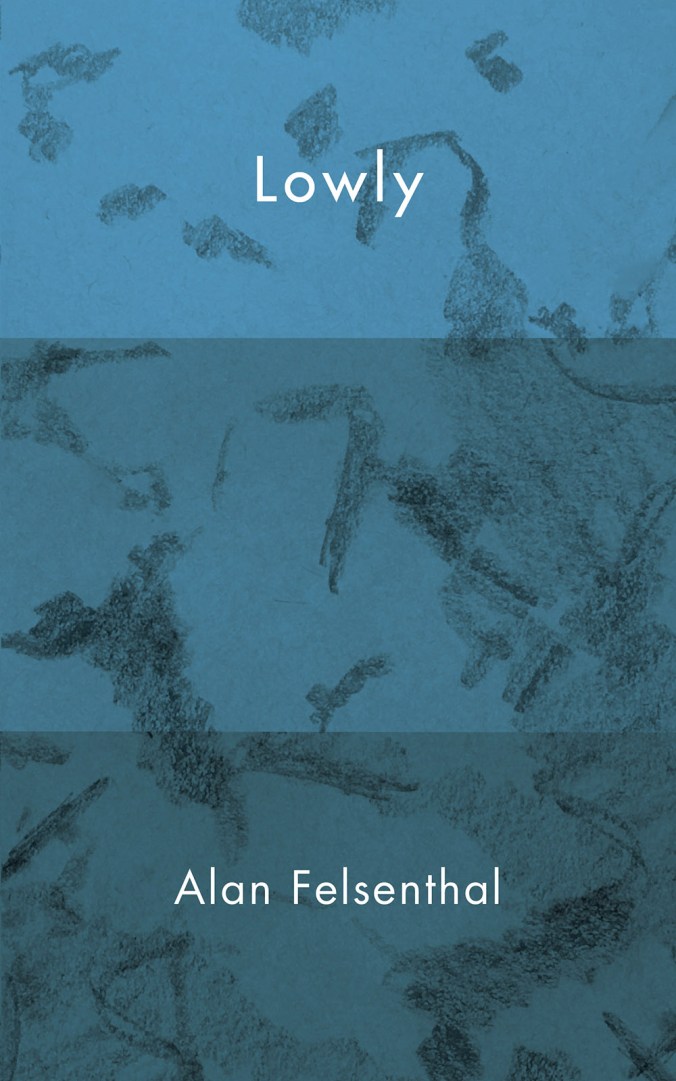
Book Review, “Lowly,” by Alan Felsenthal


LOWLY_GIANT.jpg

The opening poems of Alan Felsenthal’s Lowly suggest a collection that will fall squarely within a familiar subgenre of contemporary poetry: newly crafted myths, fables, and parables. Taking up classic modes of speech and story-telling, many poems of this subgenre operate according to a fairly defined mechanic, developing tight, logical sequences that utilize inversion, tautology, and other structural maneuvers to arrive at illuminating surprises—often with a bit of jesting. . . . But as we progress we begin to see quickly that Felsenthal is interested in something more complex than the mere crafting of postmodern parables. By the fifth poem, “If You Need a Ride,” it’s clear that we are in a much broader project. . .

Read the review at Newpages

Climbing Lion Rock: An Interview with Wawa and Henry Wei Leung

PeiPei tinfish F2-1


Hong Kong poet Wawa writes from an extraordinary intersection. Her poems in Pei Pei the Monkey King, a book set within a city where enormous shopping malls and historic temples stand one next to the other, where pet birds sing from cages in city parks while Umbrella activists protest for universal suffrage, capture an urgent and tumultuous sense of change in a place hurtling toward its future—specifically, 2047, when Hong Kong will be fully absorbed into mainland China. And yet, these poems also serve as an astonishing preservation of childhood imagination, delivering raw fables alive with animal immortals and magical forces, in which caterpillars enter our bodies through our navels and flying trees whisk us away on starry evenings. . .

Read the interview at Michigan Quarterly Review

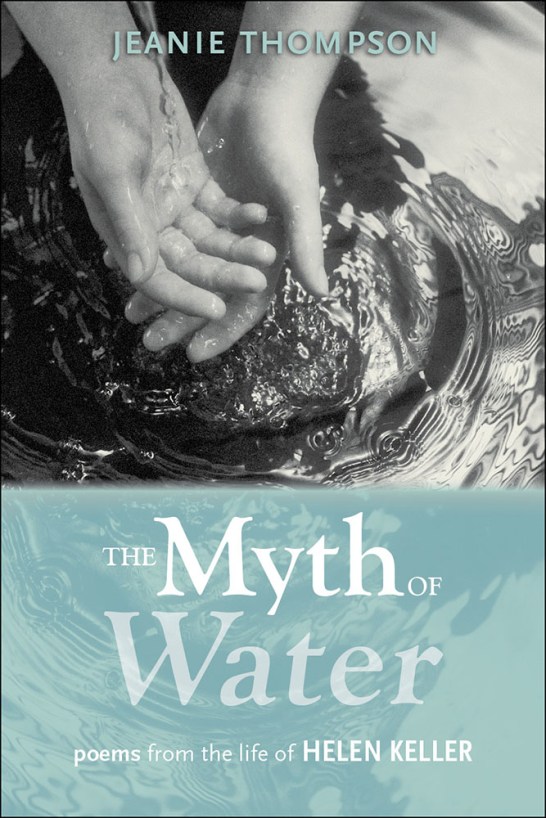
Book Review, “The Myth of Water,” by Jeanie Thompson

212-6392-Product_LargeToMediumImage.jpeg

To undertake a cycle of poems on the life of Helen Keller is to throw oneself at an interesting poetic problem: how to capture the perspective of one who lived in a wholly different perceptual world than most other people. To be sure, there are plenty of fine collections on the experiences of disability—Nick Flynn’s startlingly original Blind Huber comes to mind—but Helen Keller is a singular historical figure who, in our cultural imagination, bears a particular burden as the standout radical subject who, as if through magic, was able to speak from beyond an impassable veil.

It is with an acute sense for Keller’s abilities that Jeanie Thompson works in her book, The Myth of Water. . . 

Read the review at NewPages.


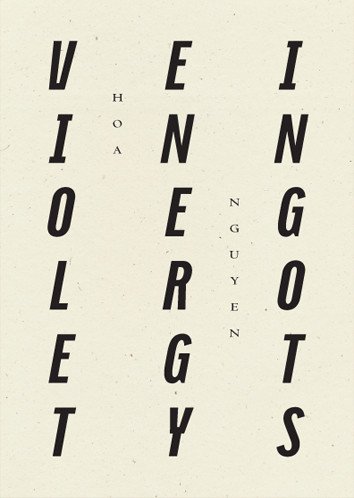
Book Review, “Violet Energy Ingots,” by Hoa Nguyen

violet_energy_ingots_sc_for_website_1024x1024

These are deeply personal, domestic poems, caught up in household activities, the nuances of partnership and parenthood, changing weather, and the day-to-day turbulences that make up the real terrain of our emotional lives: frustration with loved ones, appreciation for our children, fond but sometimes ambivalent remembrances of the past, and bitterness toward the entrenched injustices of our larger society.

Nguyen does not approach these subjects directly, however. Her poems seem to communicate outward from a subconscious that is organized by quantum probabilitiesof resonance and reference. They are messy, haphazard, and playful. They accrue obsessions—sonic and thematic tics—that come together with livewire resonance like the hum of an electric fence. . .

Read the review at The Boston Review

Book Review: “Come In Alone,” by Anslem Berrigan

Come_in_Alone_for_website_grande.jpg

I hate to focus so much on form, but in this review of Anselm Berrigan’s Come In Alone, form will take center stage. Or more accurately: form will frame the way we encounter Berrigan’s electric and vocally driven sensibilities. Because the very first thing you will notice when you open this book is the simple but profoundly innovative design, which runs all of the text as a border around an otherwise empty page. (You can look at sample pages here at the publisher’s website.)

This format might initially strike readers as gimmicky, but for as much as we talk about the space between the lines, about emptiness as a conditioning feature of poetics, I’m surprised I’ve never really encountered (even in the worlds of concrete or visual poetry) this simply conceived but radically reorienting layout, which does so much to give emptiness its primacy. Berrigan’s poems immediately force the reader to confront this emptiness as a powerful aesthetic force, and that alone is worth attention.

What the poems do after that, though, is even richer. . .

Read the review at NewPages

Sound and Light: A Quick Tour of Recorded Poetry Archives

15327339934_b37ccf56cc_o-620x413

I’ve always found the idea of the archive startling. This is to distinguish the archive from the library in a crucial way—the archive being a preservation of ephemera: letters, ledgers, and other bureaucratic documents; marginalia, fragments, and chit-chat. This is in contrast to the library’s ordered rows of lovingly bound volumes, objects materially and commercially deemed memorable, whose memory is automated by the machinery that distributed it in the first place. The archive is memory compelled, memory deliberated, held onto, preserved like a kind of wildlife—memory forced into being.

There is a politics to this, but there is also an aesthetics—the after-effect of the force of the archive is a kind of ghosting: it hints too uncannily at history reified, at history returned to the present. The voice is physically indexed, it leaves a residue in a way it simply can’t in the ordination of the library. Nowhere can one feel this than in the archives of poetry read aloud, that most ephemeral event. In this short post, I wanted to share some of the marvelous archives of poetry readings that are available. Perhaps many of these places will be familiar to you, but here they are gathered in one place, in a brief recognition of the important work put toward the preservation of the reading. . .

Read the feature at Michigan Quarterly Review.

Book Review: “The Animal Too Big to Kill,” by Shane McCrae

51C-1FVg+4L._SX342_BO1,204,203,200_

A new era of civil rights protest is here. #BlackLivesMatter announces a new racial consciousness locked on highly public injustices, police violence caught on dash cam videos and decried on Twitter, weeks-long street demonstrations helicoptered over and fed into living rooms via live streams. With the muscular momentum of wider discord, It stomps a foot in the dirt, showing us the hard truth that racism in America is as strong as ever, a brutally systemic force, at once blunt and complex.

It is into this outraged public consciousness that Shane McCrae’s prodigious output of poems (four collections in the past five years) occurs and must be received. Read some of the titles of the present collection, The Animal Too Big to Kill, and this protest is confirmed — titles such as “What it Takes to Get the Attention of White Liberals” and “I Know It’s Hard For You to Believe You Still Benefit from Slavery,” which evidence a deep awareness of the context in which these poems will be read and gesture a distinct stance — one of provocation and protest — toward that context.

So it is surprising that such a collection would begin like this:

I haven’t Lord I haven’t You I have-
n’t praised enough You Lord although I with or would
With every poem praise you

Read the review at Bookslut

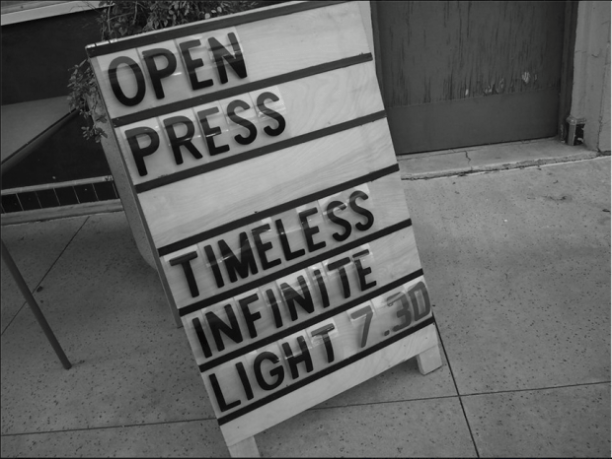
Small Press Snapshot: Timeless, Infinite Light

timeless-infinite-light-620x466

Timeless, Infinite Light is a small poetry publisher based in Oakland, but to put it that way is to sap the force out of their astonishing vigor. They are a press of the dark matter of consciousness as a nexus between heritage and the glitter of possibility, of otherness as a radical force of nature blowing tenderly but insistently against the contemporary structures of power. Their “books are spells for unraveling capitalism,” as they put it themselves, and they “believe in the radical potential of collaborative, hybrid, and embodied writing.”

I have been in love with what has grown out of these ideas. . .

Read the feature at Michigan Quarterly Review

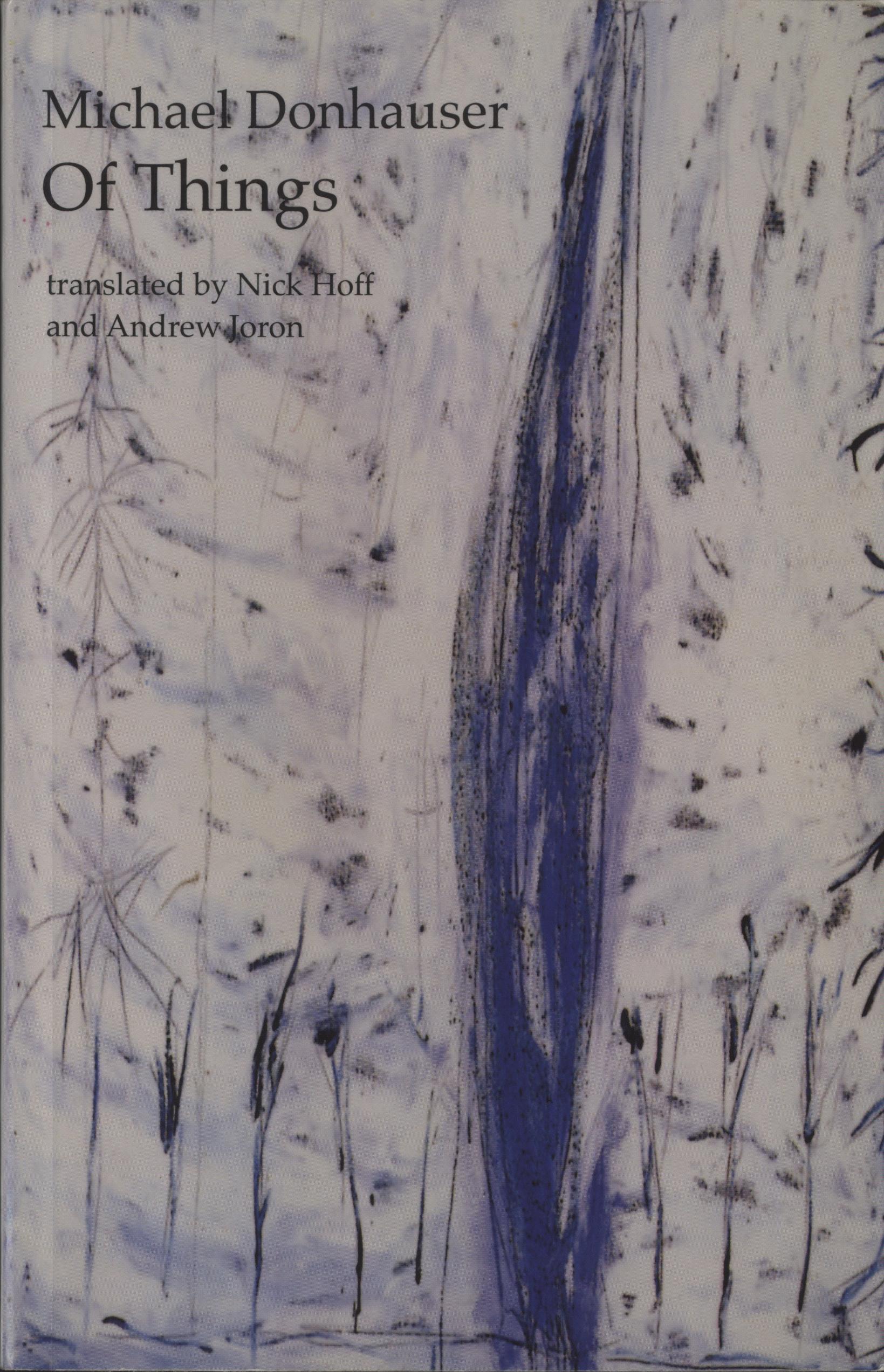
Book Review: “Of Things,” by Michael Donhauser

image0000

Michael Donhauser is an accomplished Austrian poet, essayist, and critic whose books date back nearly thirty years, but he is not widely known to English readers. It makes him a great candidate for Dichten—Burning Deck’s translation series, which brings this rich and varied collection, Of Things (first published in German nearly twenty years ago), to a needed new audience. It’s a dizzyingly varied work, finely translated by Nick Hoff and Andrew Joron. It is philosophically poised but historically informed, personal, scientific, whimsical, and serious—showcasing a real rucksack of literary tools that Donhauser brings into the field with him to sketch, like the plein air painter, his subjects.

Read the review at NewPages.


Seasonal Affective Disorder: Winter in Wallace Stevens’s “Farewell to Florida”

Key West sunset photo by Flickr user Joe Parks.jpg

Having consoled myself in damp pubs in London, creaked across frozen lakes in the deep freeze of Minnesota, and coughed my way through Philadelphian afternoons that could never decide between rain or sleet, I can tell you: there are many different kinds of cold. It’s something Wallace Stevens knew well. His poem, “The Snow Man,” is probably the most famous winter poem in modern poetry, laying before us a “distant glitter” and, within it, the full presence of winter’s unique nothingness. It’s a philosophically acute poem, five even tercets laid on the “same bare place” of Stevens’s singular thought. Many believe it captures winter in its absolute essence.

But Stevens wrote about winter in many exceptional poems. Today I want to talk about a quite different winter piece (really a seasonal/climate comparison), the opening poem of Ideas of Order, “Farewell to Florida.” It is far more expansive; it eschews austerity for something richer. It’s Stevens in a more playful mode, five sections of ten-line stanzas with a relatively straightforward conceit: leaving Key West and heading back to a wintry north. . .

Read the feature at Michigan Quarterly Review