Tomaž Šalamun: A Love List of Lines

download-620x397

Since Tomaž Šalamun’s death at the end of last year, I have been living with his poetry, walking around with it, running my hands back and forth across its lines, coming to find in its voice a friend, even though I never took a class with him, never spoke a word to him, and hardly even know about his life.

He is the kind of poet who has this effect. Many tributes were erected when he passed. . . .

I cannot offer here what others already have, but I can follow in Merrill’s footsteps and say that for a poet of such breadth, of such aggressive exploration, experimentation, absurdism—for a poet who will always surprise, and often haunt with dark themes—he is also one who leaves me feeling deeply welcomed. His intellect is warmed through with spirit and good will, a sense that kindness is the most important of all, because it can endure.

Šalamun leaves us the most incredible gift—many collections yet to be translated into English. I look forward to the first of these, Justice, due in October from Black Ocean.

In the meantime, I want to offer, as humbly as I can, this love list of lines, moments (all drawn from The Four Questions of Melancholy, which spans his work from 1966–1995) that have been with me these past nine months. . .

Read the feature at Michigan Quarterly Review

Review Essay: Thomas Hummel’s “Letters & Buildings” and the Pleasures of Difficult Poetry

Hummel-Cover

I love difficult poetry. It challenges reading itself as an endeavor and, thereby, meaning-making, imagination, voice, mood, psyche, even politics. And it can do so in an astonishing diversity of ways. One might, in fact, offer a typology of difficult poetry. Maybe a poem sends you over and over to the library, like Pound’s Cantos. Maybe it evades with an arrhythmia of syntax, like Berryman’s Dream Songs. Maybe it sloughs its lines off with seemingly little regard for a coherent sentiment, a voice of impulse and erasure, something like what John Ashbery does. Or maybe it simply overwhelms with language, with sound and light, like the poems of the wonderful contemporary poet, Joyelle McSweeney. The point is, difficult poems aren’t simply difficult; they are difficult in different kinds of ways.

And I’d like to argue that the poems in Thomas Hummel’s Letters & Buildings are difficult in one of the best kinds of ways, one that can elucidate why we ought ever to twist our faces over challenging lines.

Read the review essay at The Hairsplitter

What is Inside?: An Interview with Carrie Olivia Adams

OTCOA


Carrie Olivia Adams is a poet as much of the line as what’s in-between them, and her newest book, Operating Theater, is no exception. A haunting drama of the liminality of the body, this dialogue-driven play-poem asks over and over one profound question:what is inside? Steeped in Victorian surgical manuals and medical X-rays, the voices here explore the tension between the mind and the body, between subject and other, asking how we can know, and from knowing, live together, in a house, or in a city.

I had a chance to ask Carrie a few questions about this book (and film her reading from a brief section). . .

Read the interview at Michigan Quarterly Review

Book Review, “Testament,” by G. C. Waldrep

51ow7DiC-5L._SX331_BO1,204,203,200_

“The body as sculpture,” Testament—G. C. Waldrep’s book-length poem—begins, and with it we feel the steadying gesture that prefaces any great feat—fingers at one’s temples, eyes closed, the breath held. He goes on:

The body as sculpture. (Pageant, labyrinth.)
Wrapped like Central Park or Marin
in Christo’s silk, wiving into a future
of minerals and taffeta, hypocausts and gorse.
We have computers to calculate the rocket’s
rate of descent, its pure metaphor.

And we see right away what sort of virtuosity—one hundred and thirty pages of it—lies before us. . .

Read the review at NewPages

Book Review, “Poems (1962–1997),” by Robert Lax

robert-lax-620x430

These poems certainly elicit skepticism, but they are more than simple conceptual or design exercises. They have an oddly effective way of opening up. This is the sort of art you think you could easily make, but when you sit down to it, you make something of horribly poorer quality. Artful elimination requires a deeply tuned dedication, a kind of mental conditioning. This is how John Beer—former assistant to Lax and editor of this collection—roughly describes it in his wonderful introduction: during the writing of these poems, Lax led a spare, if not ascetic life on the Greek islands, handwriting notebooks worth of work—several poems a day—from which he would later select and typeset only the very best “worthy of preservation.”

Read the review at Michigan Quarterly Review

Book Review: “The Last Two Seconds,” by Mary Jo Bang

51m2+ihKzyL._SY344_BO1,204,203,200_

Mary Jo Bang is a slippery poet, with a mind that often seems a few seconds ahead of itself. A quick glance at the cover of her new book, The Last Two Seconds, perfectly encapsulates this kind of speed: the monorail that has just slipped from our frame of vision, the typography of the title trailing like a futurist contrail. It is this trailing, however, that is a crucial point—this collection is not about the next two seconds, but the last—as in the last two seconds you’ve just spent reading this sentence.

Take a quick leap of scale and you land at the collection’s central concern: history. . .

Read more at NewPages

Book Review: “Universe,” by Diana Hamilton

Universe_Giant_4

Diana Hamilton’s Universe is one of the tightest projects I’ve ever read: a chapbook length poem on ethics, broken into two sections (one roughly on property/possession, the other on race) and comprised largely of analytical propositions angularly cut into strikingly short lines. “You and I exist in a civil condition” the speaker asserts. Doesn’t sound very exciting, does it?

Oh, but this poem is exciting, for its sophistication and, especially, for its theatrical sensibility. . . .

Read more at NewPages

Book Review: “No Girls No Telephone,” by Brittany Cavallaro and Rebecca Hazelton

512ZIPfm5nL._SY344_BO1,204,203,200_

It’s funny to think of No Girls, No Telephones in the context of the fan genre, like everyone’s favorite 50 Shades of Gray, but let’s do that for just one wincingly good second.

Okay. Of course, this isn’t 50 Shades of Gray. This is poetry, for one. It’s a collaboration between Brittany Cavallaro and Rebecca Hazelton, two talented and accomplished poets. And perhaps most importantly, it riffs not off of a tweeny bestseller but one of the most sophisticated, startling, and idiomatic literary works of the American tradition, John Berryman’s Dream Songs. . . . 

Read more at NewPages

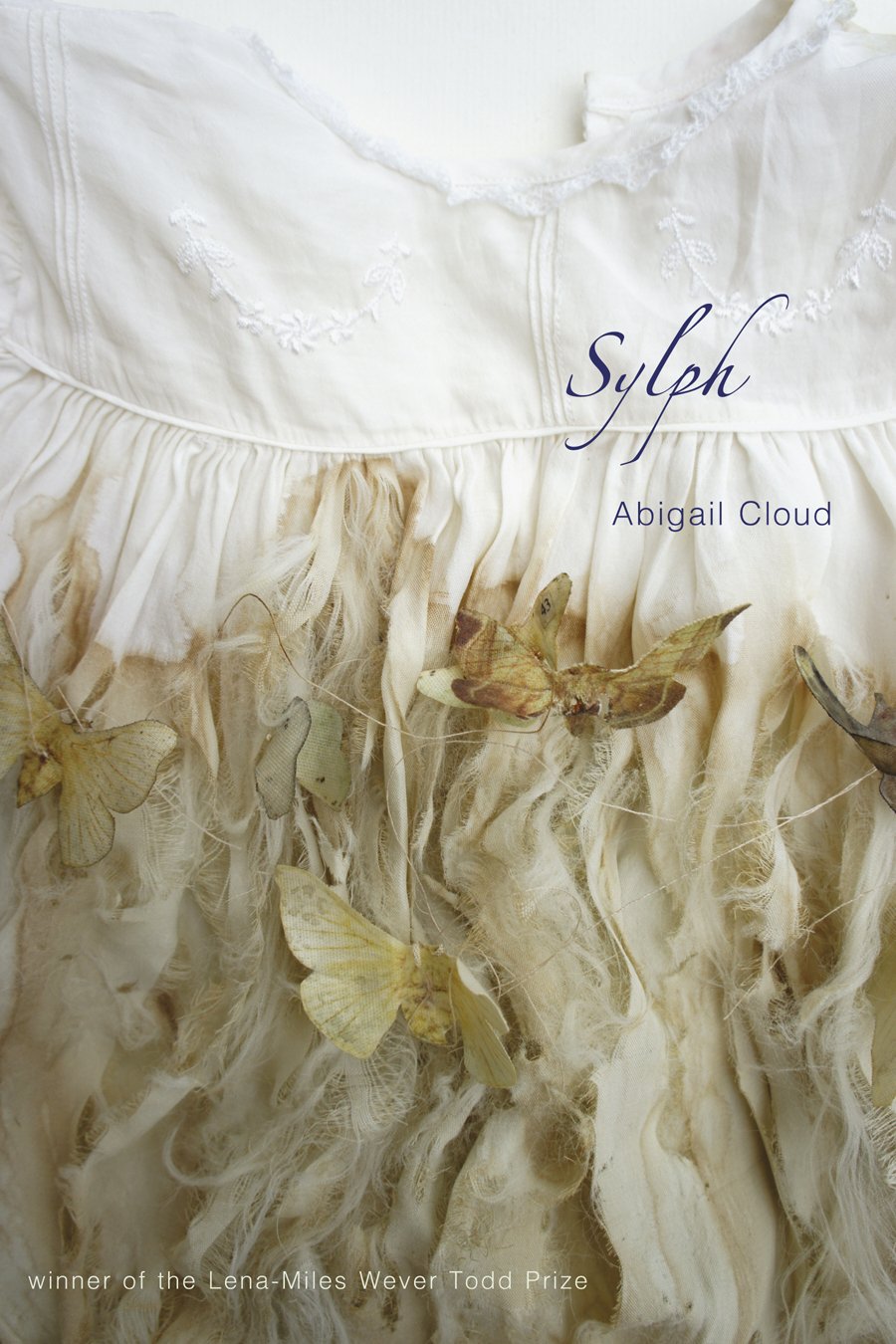
Book Review: “Sylph,” by Abigail Cloud

Book cover, Sylph, Abigail Cloud

The poems in Sylph, Abigail Cloud’s debut collection, are comprised of multiple balancing acts. They are graceful, self-assured poems, beautifully executed with a tightly focused imagistic sensibility. But they are also searching, inquisitive poems—their arrivals are real-time events, self-discoveries. They have an airy quality, as the title of the collection would suggest (there are “wings” everywhere), yet are also deeply rooted in the material world. They are as at-home in myth and the spirit world, or the haunting voices in archives, as they are in the garden and in the home. . . .

Read the whole review at NewPages